JobStack for Work | Daily Pay
- 4.7
- Rating
- 500.00K
- Installs
- Free
- Price
 Analysis by App-foxy
I approached JobStack as a practical tool rather than another polished job board. Its purpose is straightforward: help people find available work and organize the next step from a phone. That focus makes it especially interesting for anyone looking for flexible or short-term opportunities, but it also means the app is not designed to replace every part of a traditional job search.
Developed by TrueBlue®, this free business app has built a strong presence on mobile, with a 4.7 average from around 40 thousand ratings and more than 500 thousand installs. Those figures suggest that it is being used as an active employment tool, not merely downloaded and forgotten. I found the experience most useful when I treated it as a way to check opportunities regularly, rather than expecting one search to solve everything.
How JobStack feels in everyday use
The first thing I noticed is that the app is built around immediacy. Instead of asking me to create a long professional profile before I can understand what is available, it presents itself as a direct route toward work opportunities. That makes the opening experience less intimidating for someone who is between jobs, adding income, or simply testing a new type of work.
You May Also Like

 Blood Strike: 2.5 Anniversary
Blood Strike’s Loadouts Turn Every Drop Into a Tactical Gamble
A close look at Blood Strike’s custom loadouts: how fast access to signature weapons reshapes its battle royale rhythm, rewards preparation, and narrows the gap between fights.

 Pandora - Music & Podcasts
Pandora’s Music Is Easy to Start, but Harder to Recover
Pandora’s strength is its low-effort path from a seed to a station. Its weak spot is how much confidence it asks you to place in connection, setup, and quiet recovery.

 8 Ball Pool
 Is Built on Rivalries, Rematches, and Routine
A close look at the rivalries, rematches, shared routines, and unanswered safety questions that turn a quick pool match into a persistent mobile community.

 Samsung Music
’s Quiet Strength Is Playing What You Already Own
Its reach comes less from spectacle than from dependable access to a personal library. That simplicity is both the app’s strongest retention engine and its ceiling.

 AccuWeather: Weather Radar
AccuWeather Review: A Quick, Clear Forecast for Everyday Decisions
For everyday plans, the best forecast is the one you can understand quickly. AccuWeather makes rain timing, radar, and local conditions easy to act on, with a few trade-offs.

 Hill Climb Racing
Why Hill Climb Racing Still Turns Crashes Into One More Run
A tiny car, a bumpy hill and one more upgrade: Hill Climb Racing keeps resurfacing because its simple chaos makes every near-miss feel personal.
More From Our News Desk



In a realistic everyday situation, I could imagine checking JobStack during a commute, after a shift, or early in the morning before making plans for the day. The useful habit is not just searching once. It is checking when my availability changes, reviewing the details carefully, and deciding whether a particular opportunity fits my schedule and practical needs.
That last part matters because a fast application is not automatically a good match. I would still look closely at the location, timing, type of work, and any requirements shown before committing. The app can make discovery quicker, but it cannot remove the responsibility of deciding whether an opportunity is worthwhile.
A better fit for flexible work seekers
I see the strongest audience as people who want a more immediate path into work. That includes someone seeking shifts while pursuing another job, a worker trying to fill gaps in a weekly schedule, or a person who prefers exploring available assignments instead of sending the same résumé to dozens of companies.
It can also help users who are uncomfortable with conventional recruitment websites. Traditional job portals often feel built around long applications, formal cover letters, and broad searches. JobStack’s appeal is more direct: it is centered on finding work through a mobile workflow, which can feel more approachable when speed and convenience matter.
However, I would not make it my only tool if I were pursuing a specialized career, a senior position, or a role that depends heavily on networking and a detailed portfolio. For those goals, professional networks, company career pages, and industry-specific boards may offer better depth. JobStack is more convincing when the priority is discovering practical opportunities efficiently.
What the current version tells me
The current release is version 1.74.0, and the app supports devices running Android 6.0 or newer. I read that as a sign of an established mobile product rather than a brand-new experiment. The version number alone does not prove that every part of the experience is perfect, but it does indicate an app that has gone through ongoing development.
Its release date was September 28, 2023, which gives useful context when judging the product today. I would expect a service like this to evolve around usability, reliability, and the way opportunities are presented. At the same time, I would avoid assuming that a newer version automatically means every local market or every type of work is equally well served.
For existing users, the practical benefit of keeping the app updated is likely consistency with the current experience. An employment app needs to be dependable when someone is checking an opportunity quickly, so I would not rely on an old installation if the device offers a current version. That is a simple step, but it matters more here than it does with an app used only occasionally.
The workflow I would use
My advice is to begin with a narrow search mindset. Rather than browsing every possible opportunity, I would first decide what is realistic for the day or week: how far I can travel, what hours I can accept, and what kind of work I am prepared to do. This reduces the temptation to choose something merely because it appears quickly.
After finding a suitable listing, I would read the full details before applying or accepting anything. I would pay particular attention to start time and location, because a job that looks attractive at first can become inconvenient once travel and preparation are considered. If the app makes an opportunity easy to claim, that convenience should make me more careful, not less.
A useful personal system would be to keep a small note outside the app with the opportunities I have considered, the ones I applied for, and the dates I am available. That prevents confusion when several possibilities appear close together. It also helps separate genuine options from listings that do not work with my schedule.
Another non-obvious advantage of this approach is that it turns the app into a planning aid rather than a panic button. Checking calmly at a regular time gives me space to compare work, estimate travel, and avoid accepting something I cannot complete. The technology may speed up discovery, but good results still come from disciplined decisions.
Where it improves on familiar alternatives
Compared with a general job board, JobStack feels more focused on action. A broad platform may contain thousands of listings across every career level, but that variety can create noise. I often prefer a narrower tool when I already know that I am looking for accessible, practical work and do not want to spend an hour filtering out unsuitable roles.
Compared with searching company websites one by one, a centralized mobile experience saves effort. I do not have to remember which employers might be hiring or repeatedly navigate different application systems just to see what is available. That is a meaningful advantage for someone with limited time or inconsistent internet access.
Compared with asking friends or relying on local noticeboards, the app offers a more repeatable process. Personal recommendations can be valuable, but they depend on who I know and when they happen to hear about an opening. A dedicated app gives me a place to return to when my circumstances change.
The trade-off is that a focused platform may not provide the same breadth as a large general-purpose employment network. If I want extensive employer research, long-form company information, or a public professional identity, another service may be stronger. I would use JobStack for opportunity discovery and pair it with other tools when I need a fuller career picture.
Important friction before you depend on it
The biggest limitation is not necessarily the interface; it is the nature of fast-moving work. Availability can change, and an opportunity that fits one day may not fit the next. Anyone using the app should be comfortable with some uncertainty and should avoid making important financial plans around work that has not been firmly confirmed.
I also would not assume that every user will see the same value. The experience depends heavily on whether the available work matches a person’s location, schedule, and preferences. Someone living far from active opportunities may find the app less useful than someone in an area with a steady flow of suitable assignments.
There is also a personal-cost calculation that many job apps do not make obvious. A nearby shift with slightly less attractive pay can sometimes be better than a distant one once transportation, meals, and unpaid travel time are considered. I would use JobStack to find possibilities, then evaluate the real return after those costs.
Privacy and notification habits deserve attention too. A work-finding app can become distracting if I allow every alert to interrupt the day. I would keep notifications useful rather than constant, and I would review the information I enter with the same care I would use on any employment platform. Convenience should not lead me to share more personal information than the process requires.
Who should use it, and who should skip it
I would recommend trying JobStack if you want a free mobile route to work opportunities, value a quick search process, and are willing to check listings actively. It makes the most sense for people who can be flexible and who are comfortable making practical decisions about time, travel, and the type of work available.
I would be more cautious if you need a stable long-term career path immediately, want extensive résumé-building tools, or expect a single app to handle applications, interviews, networking, and professional development. That is not a criticism so much as a matter of fit. A focused job-finding app should be judged by how well it helps with its central task.
Someone who dislikes short-notice planning may also find the experience stressful. In that case, a conventional employer career page or a recruitment service with a slower, more structured process could feel more comfortable. The best option depends on whether speed is an advantage or a source of pressure.
What I would watch as the product evolves
Because the app is already at version 1.74.0, I would watch future updates for changes that make the decision-making process clearer, not merely faster. Better organization of opportunity details, dependable status information, and smoother handling of availability would have a direct effect on whether users can plan confidently.
I would also pay attention to how well the experience serves different kinds of users and locations. A job app becomes genuinely valuable when it helps people understand not only that work exists, but whether that work is realistic for them. Clearer context around schedules, travel, and expectations would strengthen the practical side of the service.
Its Everyone age rating makes the app broadly approachable, but younger or inexperienced users should still treat employment decisions seriously. An accessible interface does not replace careful reading, realistic planning, or checking the legitimacy of any request for personal information. I would encourage new users to slow down whenever an opportunity feels urgent or unclear.
My overall recommendation
After reviewing it as a business app, I think JobStack succeeds when used as a focused, repeatable way to look for work. Its free access removes an obvious barrier, and its mobile-first approach is convenient for people who need to search while moving through a busy day. The strong user response, including a 4.7 average across around 40 thousand ratings, supports the impression that it is useful to a substantial audience.
Still, I would not treat it as a complete replacement for every employment resource. The smartest setup is to use it for finding relevant opportunities, then apply personal judgment and, when necessary, supplement it with broader job boards, employer websites, or professional networks. That combination gives me speed without sacrificing context.
My bottom line is simple: JobStack is worth trying if your priority is finding practical work through a phone, especially when flexibility matters. I would keep my expectations realistic, check details before committing, and judge each opportunity by its full cost in time and travel. Used that way, the app feels less like a promise of instant employment and more like a useful tool for turning an active search into concrete possibilities.
FAQs for JobStack for Work | Daily Pay
01What is JobStack for Work and how does it function?
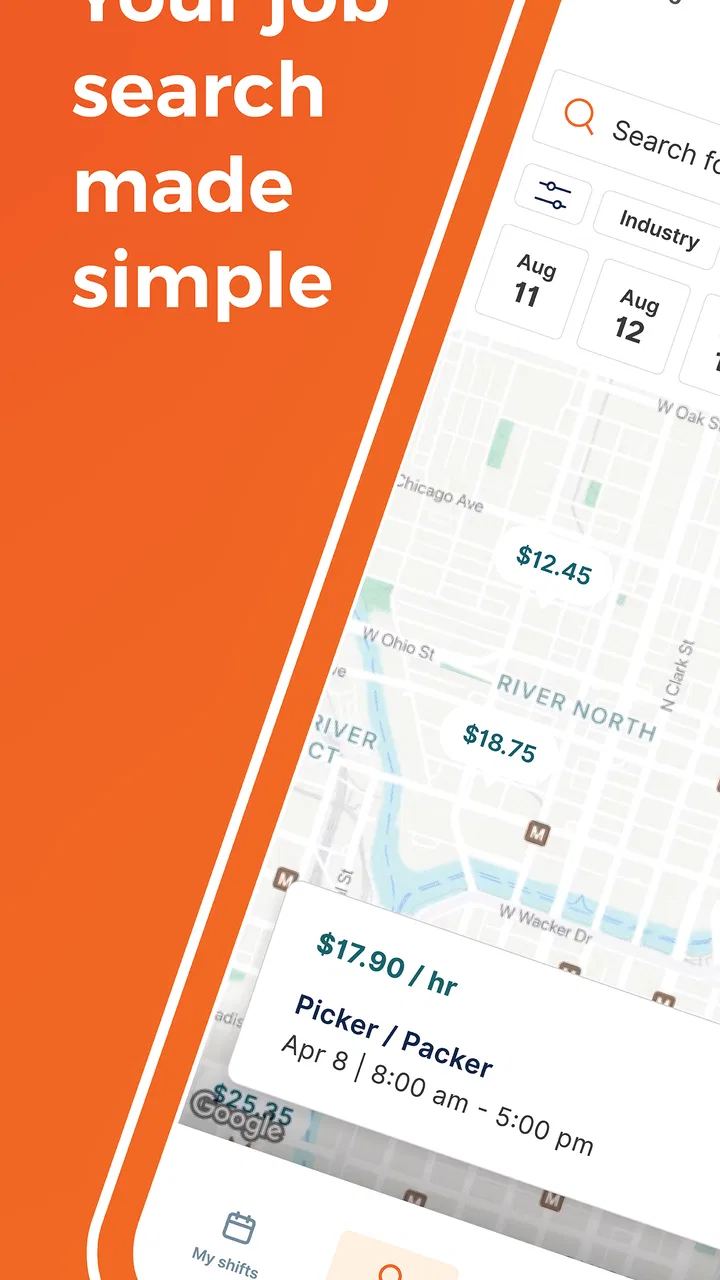
JobStack for Work is a job finding application designed to connect job seekers with employers in need of temporary staff. The app allows users to view available shifts in real-time, apply with a single tap, and manage their work schedules. Its user-friendly interface ensures that both job seekers and employers can easily navigate and utilize the platform efficiently.
02Is JobStack for Work available on both Android and iOS devices?
Yes, JobStack for Work is available for download on both Android and iOS platforms. Users can find the app on the Google Play Store for Android devices and the Apple App Store for iOS devices. This wide availability ensures that users can access job opportunities regardless of their device preference.
03Are there any costs associated with using JobStack for Work?
JobStack for Work is free to download and use for job seekers. The app does not charge any fees for browsing job opportunities or applying for shifts. Employers, however, may incur costs for posting job listings and accessing the pool of potential candidates. Always check the app's latest details for updates on any potential fees.
04How does JobStack for Work ensure the quality and reliability of job postings?
JobStack for Work employs a robust vetting process to ensure that only legitimate and reliable job postings are listed. The app partners with verified employers and uses various security measures to protect users from scams and fraudulent listings. Users can also rate and review job experiences, contributing to the app's reputation and reliability.
05What types of jobs can I find on JobStack for Work?
JobStack for Work primarily focuses on temporary and flexible job opportunities across various industries, including hospitality, logistics, retail, and more. Users can filter job listings based on their preferences, such as location and skill level, ensuring a tailored job search experience that meets individual needs and availability.
Pros
- User-friendly interface for easy navigation.
- Wide range of job listings available.
- Real-time job alerts keep you updated.
- Option to apply directly through the app.
- Customizable search filters for precision.
Cons
- Limited features without a premium account.
- Occasional bugs in the notification system.
- Some job listings may be outdated.
- Requires strong internet connection.
- Profile setup can be time-consuming.

JobStack for Work | Daily Pay
Gallery